
What Should I Feed My Puppy? (Complete Guide for New Dog Parents)
Written by: Lizzy B
Last Updated: February 2026
This post may contain affiliate links, which means that I may receive a commission if you make a purchase using these links at no cost to you.
Bringing home a puppy is magical.
It’s also overwhelming.
One of the very first questions every new dog parent types into Google at 2 a.m. is:
“What should I feed my puppy?”
If you’re asking that right now — you’re in the right place, and you are not alone.
There is so much information floating around out there, mixed with personal opinions and all kinds of recommendations, the choice can be wildly overwhelming!
This complete guide will try to keep information unbiased and informational to help walk you through:
-
Kibble vs fresh dog food
-
How much you should feed your puppy
-
A realistic puppy feeding schedule
-
Best puppy food brands to consider
-
How to transition food safely
-
Signs your puppy isn’t tolerating their food
-
The feeding supplies you actually need
And if you’re still preparing for your pup, make sure you grab our complete new puppy checklist — it covers everything you need before bringing your puppy home, including feeding essentials and a free printable.
Let’s make this simple and calm.
***Disclaimer: I am not a veterinarian, please consult your local expert for specific advice regarding your own animal.

What Should I Feed My Puppy?
If you’ve been typing what should I feed my puppy into Google at midnight while your new little fluff ball sleeps beside you… you are not alone.
The answer isn’t complicated — but it is specific.
When deciding what to feed your puppy, it really comes down to three things:
-
Age
-
Expected adult size (tiny lap dog or future gentle giant?)
-
Lifestyle (especially if you’re a working parent building a realistic puppy feeding schedule)
Those three factors guide everything.
Because puppies are not just “small dogs.”
They are growing dogs.
And growing bodies have very specific nutritional needs.
What Puppies Actually Need in Their Food
When choosing the best puppy food brands, make sure the formula is:
-
Specifically formulated for growth
-
Higher in protein and fat than adult food
-
Balanced for proper bone development
-
Easy to digest
Puppies grow incredibly fast in the first year. Their brains, bones, joints, and immune systems are developing at lightning speed. Feeding adult dog food too early can mean they’re missing nutrients designed specifically for that growth phase.
If you’re wondering how much should I feed my puppy or how often to feed a puppy, the quality of the food matters just as much as the quantity.
Good nutrition makes everything easier:
-
Energy regulation
-
Digestion
-
Potty timing
-
Coat health
-
Behavior
(Yes, even some of that wild zoomie energy.)
A Simple Rule of Thumb
When standing in the pet food aisle thinking, what should I feed my puppy, look for labels that say:
-
“Puppy”
-
“Growth”
-
“All Life Stages” (with an official AAFCO growth statement)
That AAFCO statement matters. It confirms the food meets established nutritional standards for growing puppies.
You don’t need to decode every ingredient like you’re studying for finals. Start with:
✔ Named animal protein as the first ingredient
✔ Clear growth labeling
✔ A reputable brand
Simple. Calm. Confident.
If you’d like to dive deeper into the science of puppy nutrition, the AKC Puppy Feeding Fundamentals guide is a helpful place to start.
But truly? You don’t need to become a canine nutritionist overnight.
You just need to choose a high-quality puppy formula, feed it consistently, and adjust as your puppy grows.
That’s how you build a strong foundation — one steady meal at a time.
Kibble vs Fresh Dog Food: What’s Better?
Ah yes.
The slightly dramatic, occasionally heated, often confusing debate that begins the moment you Google:
“What should I feed my puppy?”
Suddenly you’re comparing ingredient panels like you’re on a cooking show, wondering if kibble is “too processed” and if fresh dog food means you now need a second fridge.
Take a breath.
When deciding what to feed your puppy, most new dog parents are choosing between two main options: high-quality puppy kibble or fresh dog food.
Let’s calmly break both down.
Option 1: High-Quality Puppy Kibble
Kibble has been the go-to choice for decades — and for good reason.
Pros:
-
More affordable
-
Shelf stable (no fridge juggling required)
-
Easy to measure for accurate portions
-
Extremely convenient for busy or working parents
-
Widely available through retailers like Chewy, Amazon, Pet Valu, Petsmart, etc.
When you’re building a realistic puppy feeding schedule, convenience matters. Kibble makes it easier to answer both how much should I feed my puppy and how often to feed a puppy without overcomplicating things.
Cons:
-
It is processed
-
Lower moisture content
-
Some lower-end brands use fillers
That’s why quality matters. If you’re choosing kibble, look for well-reviewed, reputable brands that meet AAFCO growth standards and list a named protein first.
High-quality puppy kibble can absolutely be a healthy, complete choice.
Option 2: Fresh Dog Food
Fresh dog food brands use gently cooked, whole-food ingredients and often market themselves as a more “human-grade” option.
Pros:
-
Higher moisture content
-
Often easier to digest
-
Minimal processing
-
Very appealing to picky eaters
Some brands — like The Farmer’s Dog — have become popular because they formulate recipes tailored to your puppy’s age, size, and breed. That personalization can feel reassuring when you’re asking, what should I feed my puppy?
Cons:
-
More expensive
-
Requires refrigeration
-
Needs careful portion planning
Fresh food can be wonderful. It just requires a bit more planning (and freezer space).
If you’d like a deeper dive into canine nutrition science, the ASPCA has a helpful informational article on dog nutrition that explains ingredient basics and feeding principles in more detail.
So… What Should I Feed My Puppy?
Here’s the calm truth:
There isn’t one “perfect” answer.
When deciding what should I feed my puppy, especially as a working parent, the most important question is:
What works sustainably for your lifestyle?
Most families choose one of three approaches:
✔ High-quality puppy kibble — practical, balanced, easy to portion
✔ Fresh dog food — nutrient-dense and minimally processed
✔ A hybrid approach — kibble as a base with fresh food as a topper
And honestly? All three can work beautifully.
The best puppy food choice is one that is:
✔ Nutritionally complete for growth
✔ Within your budget (no financial stress required)
✔ Consistent (puppies thrive on rhythm)
✔ Well tolerated by your puppy’s digestion
You don’t need to win the internet debate.
You need a food that supports your puppy’s growth, fits your puppy feeding schedule, and allows you to confidently answer, “Yes — this works for us.”
Simple. Sustainable. Steady.
That’s how you build a healthy puppy — and a calm dog parent.

Best Puppy Food Brands (Beginner-Friendly Picks)
Remember, it’s always best to talk to your local professional or veterinarian. When readers ask what should I feed my puppy, it’s suggested to look for:
-
Named animal protein first ingredient
-
No artificial dyes
-
No generic “meat by-product”
-
Reputable brand transparency
Popular options available on Chewy:
-
Purina Pro Plan Puppy
-
Hill’s Science Diet Puppy
-
Royal Canin Puppy
-
Wellness Complete Health Puppy
Fresh food:
-
The Farmer’s Dog
-
Nom Nom
-
Ollie
How Much Should I Feed My Puppy?
This is the second most common question after what should I feed my puppy…
General Rule:
Follow the feeding chart on the bag — but adjust based on:
-
Your puppy’s body condition
-
Energy level
-
Breed growth rate
Small breeds mature faster.
Large breeds require controlled growth.
Make sure to consult your vet for specific requirements and find something that fits your personal puppy feeding schedule.
Body Condition Check
You should be able to:
-
Feel ribs (without pressing hard)
-
See a waist from above
-
Notice a tuck at the abdomen
If ribs are highly visible you can increase the amount slightly.
If no waist consider decreasing the amount slightly.
When in doubt, ask your vet.
How Often to Feed a Puppy
Puppies thrive on structure. Often in the first few weeks of bringing your puppy home, you can use their food as a treats for training and spread it out throughout your day.
8–12 weeks:
3–4 meals per day
3–6 months:
3 meals per day
6+ months:
2 meals per day
Puppies thrive off structure. If you give them a consistent schedule, it can reduce anxiety and help with behaviours. Check out my puppy daily schedule for an idea of how to structure your first few weeks.
Keeping your feeding consistent really helps:
-
Regulate digestion
-
Improve sleep
-
Support house training
Puppy Feeding Schedule (Working Parent Version)
If you’re working full time, finding a puppy feeding schedule that works for you is most important. It’s completely normal for feeding routines to feel overwhelming at first. You’re balancing a lot. Do your best, aim for consistency, and remember that your puppy doesn’t need perfection — they just need you showing up with care.
A sample puppy feeding schedule might look like this:
Morning (6:30 a.m.)
-
Potty
-
Breakfast
-
Short walk/play
-
Potty again
-
Crate
Midday (if possible or via sitter)
-
Potty
-
Lunch
-
Play
-
Potty
-
Rest
Evening (5:30 p.m.)
-
Potty
-
Dinner
-
Play/training
-
Final potty before bed
Feeding at consistent times gently supports your puppy potty training schedule because your puppy’s digestion becomes more predictable over time.
When meals happen on a rhythm, little bodies start to find a rhythm too.
Food → digestion → potty timing.
That simple connection is what makes house training feel less chaotic and more manageable.
If you’re crate training, feeding timing becomes even more important. Try to avoid feeding right before long crate stretches, especially overnight. A little planning here can prevent unnecessary accidents and help your puppy settle more comfortably.
If you need help building that rhythm into a realistic day, especially as a working parent, take a look at our crate training guide for working parents — it walks you through practical timing strategies in a way that feels doable, not overwhelming.

Transitioning Puppy Food Safely
If you decide to switch foods after researching what should I feed my puppy, take it slow.
There’s no rush. Your puppy’s little digestive system is still developing, and gentle transitions help everything adjust smoothly.
Think of it as easing into something new — not flipping a switch overnight.
A Calm 7-Day Transition Plan
Day 1–2: 75% old food / 25% new
Day 3–4: 50% old / 50% new
Day 5–6: 25% old / 75% new
Day 7: 100% new food
This gradual approach gives your puppy’s stomach time to adapt and reduces the chance of tummy upset.
Sudden food changes can sometimes lead to:
-
Loose stool
-
Extra gas
-
Vomiting
And if you’re switching to fresh food, transitions are especially important since the moisture and ingredient profiles are different.
If you notice mild changes in stool during the transition, don’t panic right away. Small adjustments are normal. Slow down the transition if needed, and give their system a little more time.
You’re not doing anything wrong — you’re learning your puppy.
Signs Your Puppy Isn’t Tolerating Their Food
Most puppies adjust beautifully to their food once it’s introduced properly. But it’s helpful to know what to watch for so you can feel confident, not anxious.
Keep an eye out for:
-
Ongoing loose stool
-
Frequent excessive gas
-
Repeated vomiting
-
Recurring ear infections
-
Persistent itchy skin
-
A dull coat
-
Low energy or unusual lethargy
One isolated soft stool? That’s not a crisis. Puppies are sensitive little creatures, and occasional digestive changes happen.
What we’re looking for is a pattern, not one-off moments.
If you notice persistent symptoms that don’t improve, it may be time to reassess what you feed your puppy and have a calm conversation with your vet. Sometimes small ingredient adjustments make a big difference.
Remember — feeding isn’t about finding “perfect.” It’s about finding what works well for your puppy’s body.
And you’re paying attention. That already makes you a thoughtful, capable dog parent.

Essential Feeding Supplies
(What You Actually Need)
This is the part where many new puppy parents accidentally black out in the pet store and come home with 17 bowls and a $42 “designer hydration station.”
Let’s simplify it all.
When it comes to feeding your puppy, you really don’t need much. Just a few solid, practical items that make daily life easier (and less messy).
Okay. Deep breath.
Pet stores are very good at convincing you that your puppy needs a farmhouse-inspired, elevated, hand-thrown ceramic feeding station that matches your backsplash.
They don’t.
When it comes to feeding your puppy, simple wins. Every time.
Let’s walk through what actually matters — and why.
1. Stainless Steel Bowls (The MVP)
If puppy bowls had a “most reliable friend” award, stainless steel would win it every year.
Why stainless?
-
Non-porous (doesn’t absorb bacteria)
-
Easy to sanitize
-
Dishwasher safe
-
Doesn’t hold smells
-
Extremely durable
Plastic bowls can scratch over time — and those tiny scratches can harbor bacteria. Some puppies even develop mild chin acne from plastic. Ceramic bowls are fine if they’re high quality and chip-free… but once they crack? Bacteria party.
Stainless steel just quietly does its job.
What to look for:
-
Food-grade stainless steel
-
Rubber bottom (so dinner doesn’t turn into a slip-and-slide event)
-
Dishwasher safe label
They’re affordable, practical, and they last forever. Which is perfect, because puppies grow fast but bowls don’t.
You can even grab super cute and affordable custom bowls like these beauties from Etsy created by NuvoeStore which are highly rated.

Pro tip: Look for one with a rubber bottom so it doesn’t slide across the kitchen like your puppy just discovered hockey.
2. Slow Feeder (If Your Puppy Is a “Vacuum Cleaner”)
Some puppies eat politely.
Others inhale their food like it’s a competitive sport.
Fast eating can lead to:
-
Bloating
-
Vomiting
-
Gulping air
-
Poor digestion
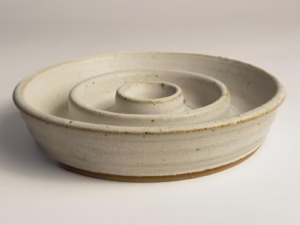
A slow feeder bowl adds little ridges or patterns that gently make your puppy work for their food — slowing them down without frustration.
Think of it as turning dinner into a puzzle instead of a race. These are also great to help drain some of that energizer bunny energy — slow feeders can add a ton of hands free mental stimulation to tire your little fur baby out.
What to buy:
-
BPA-free material
-
Dishwasher safe
-
Wide base so it doesn’t tip
-
Appropriate size for your puppy’s portion
These handmade Slow feeder bowls are a little bougie, and could be considered an investment, but they’re absolutely stunning!! Not to mention dishwasher and microwave safe.
3. Airtight Food Storage Container (Let’s Talk Glass vs Plastic)
Okay, this is where people get confused — and sometimes a little intense.
You basically have three good options:
Option A: Keep the Food in Its Original Bag (Inside a Container)
This is actually ideal.
Most high-quality kibble bags are designed to protect the food from light and oxygen. So instead of dumping kibble directly into a bin, place the entire bag inside an airtight container.
Why?
The bag contains important oils and protective lining. Dumping kibble loose into plastic can sometimes speed up nutrient degradation.
This is my favorite approach.

You can grab just a simple and inexpensive one like this from MyFurryShop off etsy and store it in your pantry to stay nice and organized.
Option B: Airtight Plastic Container (BPA-Free)
Perfectly safe when:
-
It’s food-grade
-
It seals tightly
-
It’s cleaned between bags
Popular options like the Airtight Pet Food Storage Barrel by PetHavenfindsStore off Etsy is great because it:
-
Seal tightly
-
Keep moisture and pests out
-
Store an entire bag at once

Plastic is lightweight and practical for larger bags.
Just wash and dry fully before adding new food.
Option C: Glass Container
Glass is non-porous and easy to clean, but:
-
It’s heavy
-
Not ideal for large bags
-
Can shatter

These beautiful Airtight Glass Pet Food Jars by TheGreatLabelCompany off Etsy are customizable and so darn cute!
Glass works beautifully for small breeds who go through smaller bags — but for big puppy households, plastic airtight containers are more practical.
The real key?
Keep kibble cool, dry, sealed, and away from sunlight.
That preserves nutrients and keeps your puppy’s food fresh and safe.
4. Measuring Scoop or Digital Scale
This one is sneaky.
Overfeeding is incredibly common — especially when those puppy eyes are involved.
A proper measuring scoop (or even better, a small digital kitchen scale) keeps portions consistent.
I absolutely love these little personalized Dog scoops from the PrintedPawStudio that you can grab off Etsy.

They have such an a-dog-able selection! These could also make such a beautiful and thoughful gift if you’re looking to shop for a Dog lover, or a new puppy parent.
Precision matters. Especially for small breeds where an extra handful is actually a significant percentage of their daily calories.
Consistency in portions helps:
-
Maintain healthy weight
-
Support digestion
-
Keep your puppy’s energy steady
It also supports your puppy potty training schedule, because predictable input creates predictable output.
Food in → digestion → potty timing out. (Science… but make it practical.)
If you want a full breakdown of feeding supplies and other must-haves, you can find them inside our puppy essentials list — it covers everything you need before bringing your puppy home without the overwhelm.
Best Water Bowls for Puppies
When you’re figuring out what should I feed my puppy, don’t forget the other half of the equation: water.
Hydration matters just as much as choosing the best puppy food brands or building the perfect puppy feeding schedule. Little paws are constantly running, learning, growing — and that tiny body needs steady access to fresh, clean water all day long.
The good news? Choosing the best water bowl for your puppy is refreshingly simple.
What to Look For in a Puppy Water Bowl
Keep it practical.
Choose:
-
Stainless steel (non-porous and bacteria-resistant)
-
Rubber bottom (so it doesn’t slide across your kitchen mid-slurp)
-
Dishwasher safe (because real life is busy)
Stainless steel is the gold standard here. It doesn’t hold odors, it’s easy to sanitize, and it won’t develop microscopic scratches that trap bacteria. When you’re managing a puppy feeding schedule and potty training routine, the last thing you want is preventable tummy trouble from a dirty bowl.
What to Avoid
-
Plastic bowls (they can harbor bacteria and sometimes cause chin acne in sensitive puppies)
-
Decorative ceramic bowls with cracks or chips (those tiny fractures can trap moisture and bacteria)
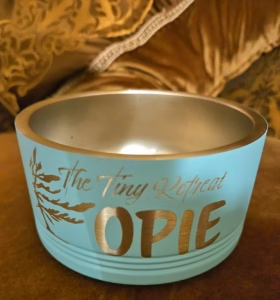
I love these Insulated Stainless Steel Pet Bowls from TWWEngravedMemories off Etsy. These custom and personlized bowls make for such a unique addition to your pups’ routine.
And remember — always keep fresh water available. Especially after meals, play sessions, or outdoor adventures. Puppies can get dehydrated faster than adult dogs, particularly during growth spurts.
You don’t need:
-
Marble hydration stations
-
Designer raised feeders
-
A gold-plated puppy fountain (unless that brings you joy, in which case… live your best life 😉)
You need:
Clean bowl.
Fresh water.
Daily rinse.
Simple tools. Consistent routine. Healthy puppy.
And honestly? That’s the theme of this whole guide to what should I feed my puppy — keep it steady, keep it clean, keep it uncomplicated.
Feeding Routine & Behavior
Feeding is about more than nutrition.
It’s about rhythm.
It’s about safety.
It’s about creating predictable moments in a brand-new world.
For your puppy, mealtime isn’t just calories — it’s structure. It’s a pause in the day. It’s reassurance that their needs will be met again and again.
And that steady rhythm? It shapes behavior more than we realize.
Hungry puppies are often mouthy puppies. When little bodies are out of sync, it can show up as extra nipping, restlessness, or zoomies at inconvenient times. If you’re navigating that stage, our guide on how to stop puppy biting can help — sometimes simply adjusting your puppy feeding schedule makes a noticeable difference.
Food is also one of your most powerful training tools. You can use a portion of your puppy’s daily kibble as rewards during outings or confidence-building moments from your puppy socialization guide.
Food becomes reinforcement.
Reinforcement builds trust.
Trust builds confidence.
And confident puppies grow into calm dogs.
When feeding is consistent, everything else feels steadier — potty training, crate training, even sleep.
It’s not just about what should I feed my puppy.
It’s about how feeding becomes part of the emotional foundation you’re building together.

Frequently Asked Questions
What should I feed my 8-week-old puppy?
Feed a high-quality puppy-specific formula labeled for growth. Divide into 3–4 small meals per day.
How much should I feed my puppy per day?
Follow the feeding chart and adjust based on body condition and energy level.
Is fresh dog food better than kibble?
Fresh food may be more digestible, but high-quality kibble is nutritionally complete and convenient for most families.
How often should I feed a puppy?
Under 3 months: 3–4 meals daily.
3–6 months: 3 meals.
6+ months: 2 meals.
Can I mix kibble and fresh food?
Yes, many families use a hybrid approach. Transition slowly and monitor digestion.
Final Thoughts
If you’ve been spiraling over what should I feed my puppy, pause for a moment.
Take a breath.
There isn’t one perfect brand.
There isn’t one perfect feeding schedule.
There isn’t one perfect answer.
There is:
Safe.
Balanced.
Consistent.
Thoughtful.
Start simple.
Choose a high-quality puppy food that fits your lifestyle.
Follow a steady puppy feeding schedule.
Adjust portions as your puppy grows.
Pay attention to their body, their energy, their digestion.
You don’t need to be perfect.
You need to be present.
You need rhythm.
And rhythm — repeated, calm, predictable rhythm — builds secure, confident dogs.
You are learning.
You are paying attention.
You are building something steady.
That’s more than enough.
You’ve got this.
Read More From the Blog
Puppy Biting & Nipping: 7 Tips on How to Stop Puppy Biting Gently (Without Yelling or Punishment)
Puppy biting is normal, we’ve got you! Learn how to stop puppy biting and nipping gently using trust-based, force-free methods that support your puppy’s nervous system.
Puppy Socialization: A 7 Steps Guide to Raise a Happy Dog
A gentle step-by-step guide to puppy socialization. Learn how to socialize your puppy safely, build confidence, and use a calm, positive socialization routine.
Puppy Daily Schedule: 10 Tips for A Calm Routine for Structure & Sanity
Create the perfect puppy daily schedule with our free printable routine chart! Learn how to plan your new puppy’s day—from potty breaks and naps to feeding and training. This easy puppy routine helps reduce accidents, calm chaos, and build structure for a happy, well-trained pup.
Puppy Potty Training Schedule: 5 Calm Tips For A Simple Routine for New Puppy Parents
A calm, confidence-boosting guide to puppy potty training schedule with a free printable. Learn how to set a simple daily routine, avoid accidents, and housebreak your puppy gently.
Easy Puppy Crate Training Schedule for Working Parents: 10 Tips
Puppy Crate Training Schedule for Working Parents: Learn how to crate train your puppy while at work! Includes daily schedules, potty training tips, and printable puppy routine charts.
Ultimate New Puppy Checklist 2026: Must-Have Puppy Essentials for First-Time Dog Owners
Bringing home a new puppy? 🐶 This complete new puppy checklist covers all the essentials—from crates and beds to toys and training tools. Perfect for new pawrents in 2025!